





























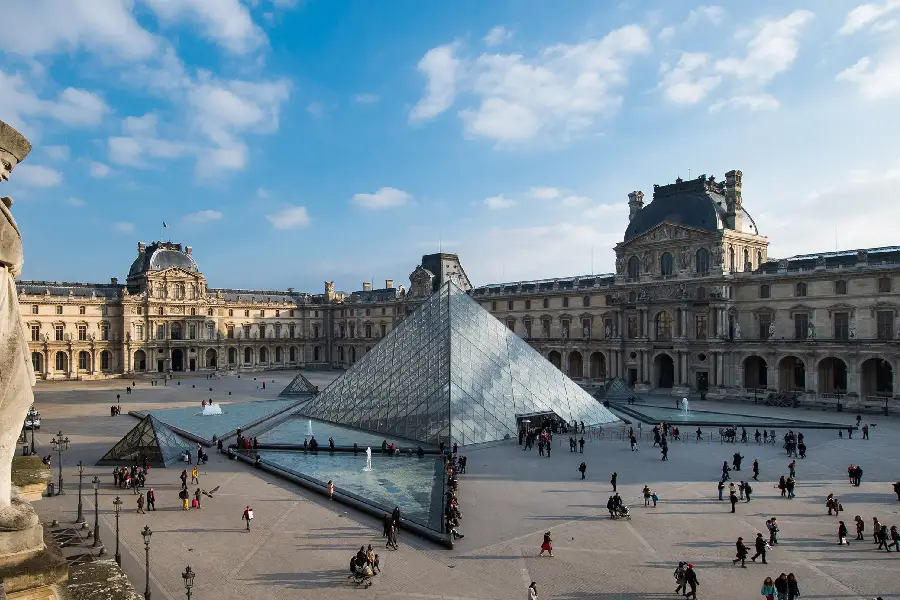










































The Louvre is the biggest art museum on the planet. It holds something like 35,000 works of art on display. Most visitors make the mistake of trying to see too much. They end up overlooking incredible treasures.
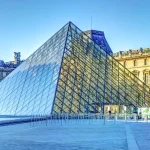
In the first visit. I walked through the glass pyramid full of energy, ready to see the artworks. Twenty minutes later, I was hopelessly lost in the Egypt section near the Great Sphinx of Tanis, and I wasn’t sure if I’d even seen a painting yet.
After multiple visits and a lot of wrong turns, I can tell you everything about the Louvre Museum you must witness. I’m going to walk you through the Louvre Museum best paintings that you might otherwise walk right past.
Key Takeaways
- The most famous artworks are mainly in the Denon and Sully wings.
- Knowing the exact rooms helps you move fast and avoid confusion.
- The Mona Lisa, Venus de Milo, and Liberty Leading the People are the must-see stops.
- Large masterpieces like The Wedding Feast at Cana are easier to view early in the day.
- A planned route and booking in advance save time and make the Louvre feel more magical and poetic.
15 Most Famous Artworks at the Musée du Louvre.
The Denon Wing Heavyweights
If you only have two hours, head straight for the Denon Wing. This section of the museum has the world’s most iconic paintings; in fact, more of the “bucket list” famous paintings live here. It is going to be crowded, noisy, and chaotic—just part of the experience.
1. The Mona Lisa (Leonardo da Vinci)
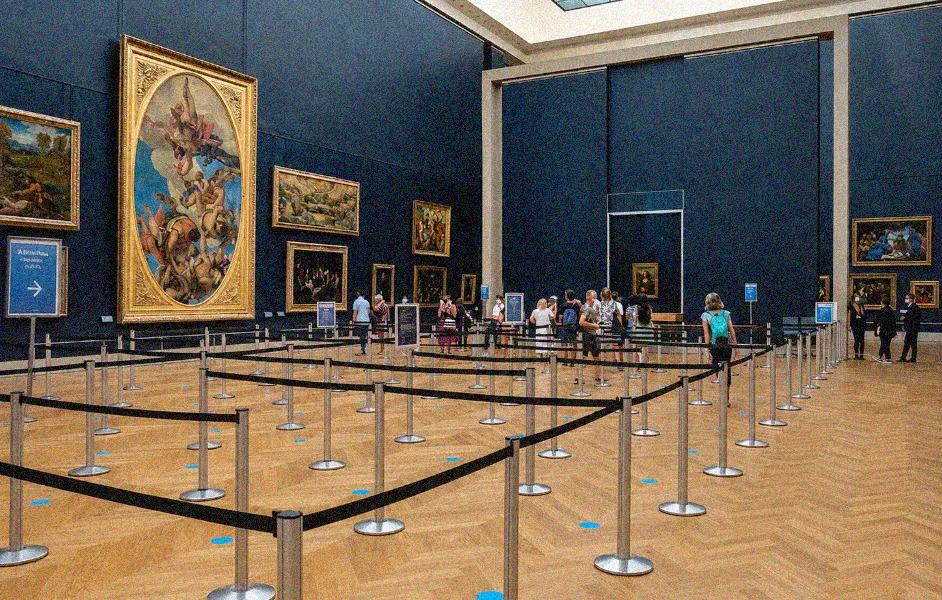
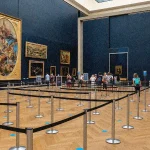
We have to start here. It is the main reason half the people are in the building. You will follow signs with her face on them until you reach a massive room filled with hundreds of people holding up their phones.
The Mona Lisa is smaller than you think it is. It sits behind thick bulletproof glass. You will have to gently elbow your way to the front to get a good look. Try to ignore the crowd and focus just on her face.
Leonardo used a technique called sfumato, which means “like smoke,” to blur the edges of her smile and eyes. That is why her expression seems to change when you look at her. It’s a psychological trick painted 5 hundred years ago.
Excited to see the Mona Lisa’s enigmatic smile? Check out Louvre Museum Mona Lisa Tickets.
2. The Wedding Feast at Cana (Paolo Veronese)

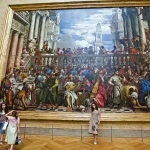
The biggest mistake people make in the Mona Lisa room is leaving immediately after seeing her. Directly behind you, on the exact opposite wall, is the largest painting in the entire Louvre.
The Wedding Feast at Cana, by Paolo is massive. It covers the entire wall.
- It depicts the biblical scene where Jesus turns water into wine, but Veronese set it in a lavish, party-loving Venetian setting.
- There are over 130 figures in the painting, including portraits of famous kings and queens and even the artist himself playing music.
- The colors are vibrant, the scale is overwhelming, and the level of detail is incredible.
3. Liberty Leading the People (Eugène Delacroix)

This is easily one of the best paintings in the Louvre because of its raw energy, representing the French spirit of revolution.
Liberty Leading the People shows a topless woman, symbolizing the July Revolution of 1830 in France. The woman is holding the tricolor flag high while climbing over a barricade of bodies. She is leading a motley crew of Parisians, including a young boy with pistols and men in top hats. It is chaotic, violent, and incredibly inspiring.
Fun fact: It wasn’t actually painted about the main French Revolution of 1789, but a later uprising in 1830.
Didn’t book your ticket on time? This is how to secure Louvre Museum last-minute tickets
French Drama in the Denon and Daru wings
French painters in the 1800s didn’t do subtle. Art enthusiasts liked their paintings huge, emotional, and full of drama. You will find these massive canvases in this part of the museum.
4. The Coronation of Napoleon (Jacques-Louis David)
This painting is astonishingly big. It feels more like a movie screen than a canvas. It is roughly 33 feet wide and 20 feet tall.
Napoleon commissioned The Coronation of Napoleon to show off his power after declaring himself Emperor, the King of France. The artist, Jacques-Louis David, filled the scene with real historical figures. You’ll see the Pope isn’t crowning Napoleon.
He is already wearing a laurel wreath and is holding a crown up to place it on the head of his wife, Josephine. It was Napoleon’s way of showing that his power came from himself, not the church.
5. The Raft of the Medusa (Théodore Géricault)
This might be the most intense and depressing painting in the whole museum. It is dark, moody, and hard to look away from.
The Raft of the Medusa depicts a real-life tragedy. A French navy frigate sank off the coast of Africa in 1816. The captain and officers took the lifeboats, leaving 147 crew and soldiers to build a makeshift raft. They drifted for 13 days. It descended into madness, starvation, and cannibalism. Only 15 men survived.
The painting shows the moment they spot a rescue ship on the horizon. You see a pyramid of bodies, a deeply emotional look at human survival.
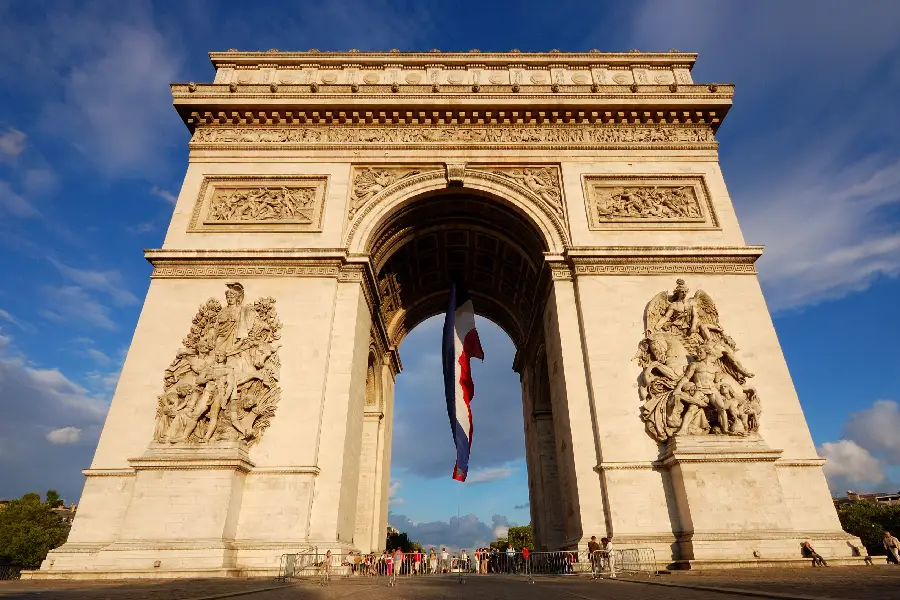
Tip For Travelers: Are you thinking about visiting the Arc de Triomphe from the Louvre? See this guide to Landmarks & Routes.
6. The Oath of the Horatii (Jacques-Louis David)
Before he was painting Napoleon, Jacques-Louis David was the master of a style called Neoclassicism, usually using Roman history as a backdrop. The Oath of the Horatii is the ultimate example of this. It shows three brothers swearing an oath to their father to fight to the death for Rome.
The men are rigid and strong, defined by straight lines. In contrast, the women to the right are curved, weeping, and emotional. It’s visually striking because it looks so clean and posed compared to the chaos of the Romantic paintings nearby.
Also read: Expensive Things to Do in Paris- Luxurious Experiences & VIP Delights.
Italian Masters Beyond the Mona Lisa
While Leonardo gets all the attention, the world’s most famous Italian masterpieces are here to view. These Venetian paintings glow with warm color, dramatic light, and rich narratives typical of Italy’s most theatrical school.
7. Portrait of Baldassare Castiglione (Raphael)
Raphael was part of the big three High Renaissance artists, along with Leonardo and Michelangelo. This portrait is considered one of the greatest ever painted.
Baldassare Castiglione was a diplomat, a writer, and a friend of Raphael. What makes this painting so special is the eyes. They are incredibly warm and intelligent; they seem to follow you to touch the softness. It’s a quiet painting that screams quality.
8. The Death of the Virgin (Caravaggio)
Caravaggio was the bad boy of the art world in the early 1600s. He was known for getting into sword fights and for changing painting forever with his extreme use of light and shadow.
The Death of the Virgin shows the Virgin Mary having just died, surrounded by grieving apostles. When Caravaggio painted this, the church refused to accept it. They felt it was too disrespectful.
Mary doesn’t look like a holy saint ascending to heaven. She looks like a real corpse of a poor woman. Now, it’s widely admired. It is raw, human grief, but illuminated by a single dramatic light source.
9. Saint John the Baptist (Leonardo da Vinci)
Before you leave the Italian section, look for another Leonardo da Vinci. This was likely his very last painting.
Saint John the Baptist emerges from total darkness. He has that same strange, knowing smile that Leonardo is famous for. His body is soft and almost feminine, which was very different from how the rugged John the Baptist was usually portrayed. It’s a mysterious, hypnotic painting that shows Leonardo’s absolute mastery of light and shadow.
Northern Charm and Curious Stories
If the crowds in the Italian section get too intense, head over to the Richelieu or Sully wings to find the Dutch and Flemish masters. The vibe here is totally different. These paintings often focus on normal people doing normal things in incredible detail.
10. The Lacemaker (Johannes Vermeer)

This is one of my absolute favorites. After seeing 30-foot-wide battle scenes, your eyes will rest when you see The Lacemaker. It is tiny, hardly bigger than a sheet of notebook paper.
Vermeer, who also painted the famous Girl with a Pearl Earring, was the master of quiet, domestic scenes. This painting shows a young woman totally focused on her complex work. It’s a perfect little moment frozen in time.
11. The Astronomer (Johannes Vermeer)
Since the Louvre doesn’t have many Vermeers, you should see the other major one it possesses. The Astronomer shows a man studying a celestial globe by the light of a window.
It celebrates the golden age of Dutch science and exploration. Like The Lacemaker, it’s all about the quiet concentration and the beautiful way light hits different textures, like the crumpled carpet on the table or the man’s robe.
12. Gabrielle d’Estrées and One of Her Sisters (Anonymous School of Fontainebleau)
You will know this painting when you see it because you will probably stop and say, “Wait, what are they doing?”
It shows two very pale, topless women sitting in a bathtub lined with grey fabric. It looks bizarre to us today, but it was full of symbolism for people back then. The woman being pinched is Gabrielle d’Estrées, who was the favorite mistress of King Henry IV.
13. The Cheat with the Ace of Diamonds (Georges de la Tour)
This is a fun one because it tells a very clear story. It feels almost like a cartoon panel from the 1600s.
The Cheat with the Ace of Diamonds shows four people playing cards. On the right, you have a young, very richly dressed man looking at his cards. He is the victim. On the left, another player is casually pulling an ace of diamonds out from behind his back.
The female player in the center is looking at the cheat with a sly side-eye, and she is pointing a finger, signaling that she is in on the scam. The servant pouring wine is also looking down, complicit in the act. It’s a great study in body language and morality.
More Portraits and Personalities
To round out your visit, here are a few more stunning portrayals of people who are historically or artistically significant.
14. Madame Récamier (Jacques-Louis David)
You have probably seen this pose imitated a million times. Madame Récamier was a famous Parisian socialite known for her beauty and intelligence. David painted her reclining on a specific type of sofa that is now often called a “récamier” because of this picture.
The interesting thing is that David never considered it finished. He got annoyed that Madame Récamier was taking too long with the sittings and was flirting with another artist, so he just stopped working on it. The background is bare, and her dress feels simple. But that unfinished quality actually makes it look very modern and elegant today.
15. Portrait of a Black Woman (Marie-Guillemine Benoist)
This painting has gained a ton of well-deserved attention in recent years. Painted in 1800, shortly after France temporarily abolished slavery in its colonies, it is a striking and rare image for the time. She is looking directly at the viewer with dignity and confidence. Portrait of a Black Woman is a beautiful piece of art and a crucial historical document.
Ready to explore the world’s largest collections at the Louvre? Here’s our guide to do it step by step.
Things To See At the Louvre Beyond Must-see Masterpieces
Venus de Milo (Ancient Greek Sculpture)

The Venus de Milo is one of the most famous sculptures in the Louvre and a highlight of the museum’s Greek antiquities collection. She was carved around the 2nd century BC and is widely believed to represent Aphrodite, the Greek goddess of love and beauty.
The statue was discovered in 1820 on the Aegean island of Melos (now Milos) and was presented to the French king Louis XVIII, who donated it to the Louvre in 1821. This piece is a stand-alone sculpture located in the Sully Wing, Room 346, where it is displayed with other Greek masterpieces.
Marly Horses
Marble copies of the Marly Horses now stand at the original site in Marly-le-Roi and also at the entrance to the Champs-Élysées in Paris, specifically the Place de la Concorde.
Canova’s Psyche
Nearby, you will find Canova’s Psyche Revived by Cupid’s Kiss, one of the most romantic neoclassical sculptures on display at the Louvre
Related: Take a look at the Best Time to Visit the Louvre Museum.
Checklist That Will Make An Easy Visit To Paris
| Get a Travel Adapter | Get Travel Insurance |
| Buy Your Flight Ticket | Purchase your SIM card in advance |
| Pick up Comfortable Shoes | Buy Convenient Luggage |
| Pack a Winter Jacket | Carry Documents Wallet |
| Where to Book Hotels: | Top Tickets & Tours: |
| Booking.Com | Louvre Museum Permanent collection tickets |
| Airbnb | Reserve Your Spot For Paris Louvre, Seine River Cruise, And Hop on Hop Off Bus Tour |
| Hostel World | Discover Paris at Your Own Pace—Louvre Museum Reserved Tour Entry Ticket |
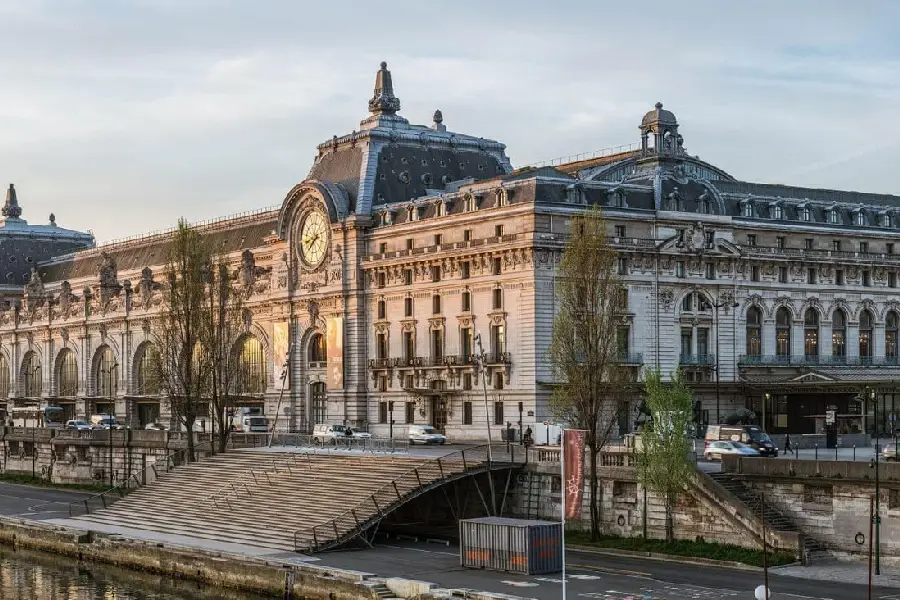
Got some extra time? Include Musée d’Orsay in your plan too when you’re in Paris. Get tickets here.
FAQs: The Louvre’s Best Paintings
How much time do I need to see the best paintings in the Louvre?
To see the major highlights mentioned in this article without sprinting, you need about three hours. If you only want to see the Mona Lisa and leave, you could do it in 90 minutes, depending on the security lines.
Where is the Mona Lisa located in the Louvre?
She is located in the Denon Wing on the 1st floor (which Americans would call the 2nd floor), in Room 711. Just follow the crowd; everyone is heading to the same place.
Is it allowed to take photos of the paintings?
Yes, photography for personal use is allowed in the permanent collections. However, you absolutely cannot use flash or equipment like tripods or selfie sticks.
Are there bad times to visit the Louvre?
Yes. First thing Monday morning is usually chaotic because the museum is closed on Tuesdays. Weekends are always packed. Wednesday and Friday evenings, when the museum stays open later, can sometimes be a bit quieter.
What if I get lost at the Louvre?
You will get lost. It’s part of the fun. Don’t panic. Look for the main escalators under the glass pyramid to reorient yourself. Ask a staff member for help; many speak English and can point you toward the main wings.
Also read: Explore The Best Christmas Markets in Europe
Final Thoughts
Trying to see these fifteen paintings is a solid goal for a first visit. It will take you a few hours, and you will walk several miles inside the museum. Don’t feel guilty if you walk past a room full of Rembrandts because your feet hurt and you just want a coffee.
The Louvre is large. The best way to enjoy it is to accept that you can’t see everything. Focus on the Louvre museum’s best paintings, take your time, and let the rest be a reason to come back to Paris another time.